Handmade Gifts
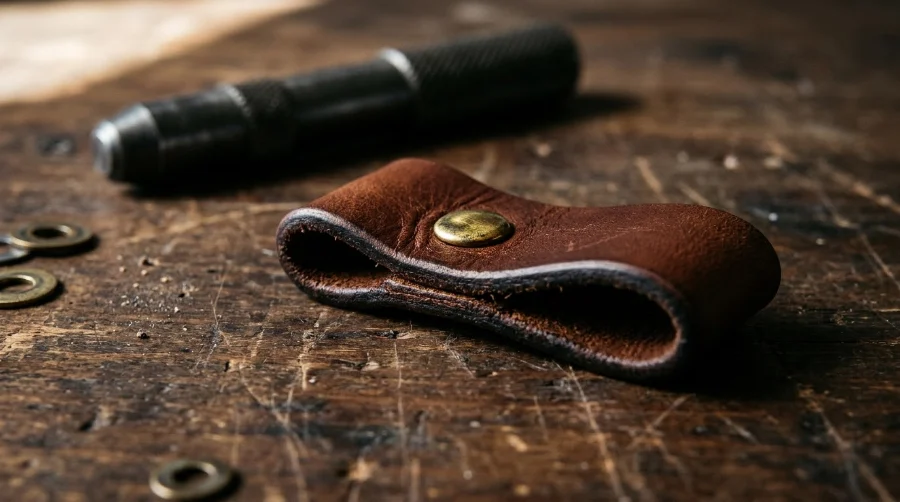
Leather Key Fob Closed With a Single Rivet
Vegetable-tanned leather around two millimeters thick is stiff enough to hold a folded loop, yet supple enough to bend around a key ring without cracking. That…
This is a gift whose quality depends on waiting. You can assemble the jar in an afternoon, but the liquid inside needs time in a dark cupboard before it tastes and…
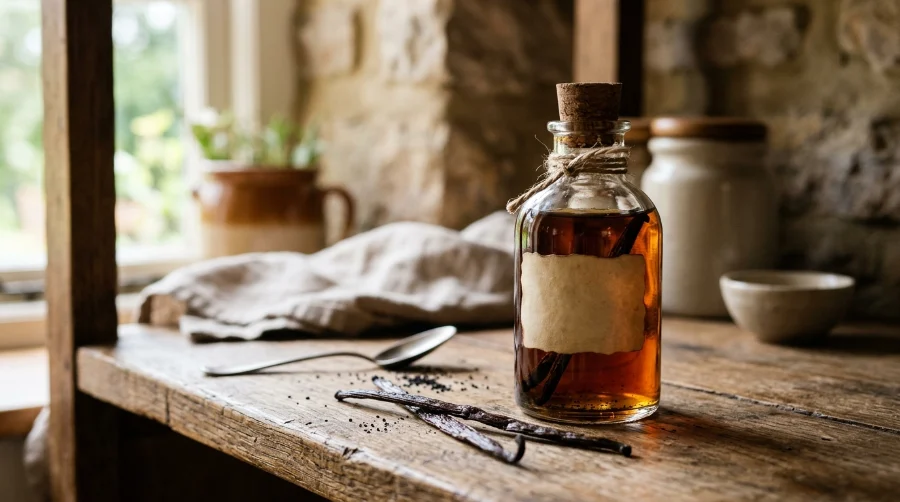
This is a gift whose quality depends on waiting. You can assemble the jar in an afternoon, but the liquid inside needs time in a dark cupboard before it tastes and smells like extract. Nothing about the process is complicated, and there is no secret ingredient beyond good vanilla beans and a suitable spirit. The useful skill here is knowing what to look for when judging readiness, so you label the jar honestly and give it away at the right moment rather than too early.
Use a food-grade spirit at roughly 35 to 40 percent alcohol. This strength is what draws the flavor and aroma out of the beans and holds it in solution. A lower-proof drink will not extract as well, and a higher-proof one can be harsh. Only use spirits intended for drinking; anything sold for cleaning or fuel has no place in a jar that will be used in food.
The spirit should be plain and neutral so the vanilla can lead. A lightly oaked spirit will add its own character, which is fine if you know it is there, but it makes the result less predictable as a baking ingredient. Choose beans that are pliable and fragrant rather than dry and brittle. If they snap sharply when bent, they have been stored too long to give much flavor.
Different bean types give different results, and that is worth noting on the label later. What matters for the method is that the beans are whole, clean, and aromatic before they go into the jar.
Wash the glass bottle and its closure in hot, soapy water, rinse well, and sterilize them before filling. A hot dishwasher cycle works for most glass bottles, or you can cover the clean bottle and lid with boiling water. Handle hot glass carefully and use a cloth or tongs when lifting it out.
Let the bottle and closure cool completely before adding the spirit. Pouring alcohol into a hot bottle is unpleasant work and can drive off some of the aroma you are trying to keep. Check the inside for water droplets as well; a small amount of residual water will dilute the spirit at the bottom of the jar.
Inspect the closure while it is still in your hands. A cap that does not seal firmly will let alcohol evaporate slowly, and the smell will give it away long before you notice the drop in level.
Use roughly three to four beans per 250 milliliters of spirit. This is a working ratio rather than a precise rule; a jar with more beans will taste stronger, and one with fewer will be gentler. Keep the ratio in proportion if you are making a larger or smaller batch, and write down what you used for future reference.
With a sharp knife, split each bean lengthwise so the inside of the pod is exposed. The seeds and the sticky interior are where much of the flavor sits, so opening the pod gives the spirit far more surface to work on. Cut the split beans to a length that fits the bottle, but do not chop them into tiny pieces, which makes the finished jar cloudy with floating specks.
Work on a clean board and keep the knife away from your holding hand. Wipe the blade between beans so oil does not build up and make the cuts slip.
Drop the split beans into the cooled bottle, then add the spirit through a small funnel. The beans should be fully submerged. If the liquid does not cover them, add a little more spirit rather than leaving a portion exposed, since bean material above the surface can dry out and lose its aroma.
Give the bottle a gentle swirl to settle the beans and work out any trapped air bubbles. Seal it tightly and wipe the rim dry. At this stage the liquid will look pale and the beans will look much as they did before; very little has happened yet, and that is expected.
Put the bottle in a dark cupboard at ordinary room temperature. Light gradually dulls the color and can flatten the aroma, so a cupboard is better than a windowsill or an open shelf. Leave it undisturbed except for an occasional gentle shake, turning the bottle a few times to move the spirit around the beans.
There is no need to shake it hard or every day. A calm, dark place and a little movement now and then are enough. Keep the bottle upright and check the seal from time to time; if you can smell alcohol around the cap, the closure needs replacing before the extract is ready.
Do not rely on a fixed number of days or weeks. The liquid is ready when it has turned a deep amber-brown and smells strongly and distinctly of vanilla when the bottle is opened. That change usually takes several weeks, and it can take longer with larger beans or a cooler cupboard.
Those two signs matter more than the clock. Pale liquid with a faint smell is still extracting, whatever the date on your notes says. Deep color and a full aroma mean the infusion has gone far enough. Once it reaches that point, you can strain out the beans if you like a clear product, or leave them in the bottle, which slowly deepens the flavor.
Be honest about the limits of a homemade infusion. It will vary from batch to batch with the beans and the spirit, so it is not a standardized baking ingredient. That variability is part of the character of the gift, but it is worth mentioning to the person receiving it.
Write a label before you give the jar away, and include two pieces of information: the bean type and the start date. The date lets the recipient know how long the extract has been infusing and roughly when it reached its peak. If you strained the beans or left them in, note that too.
A plain paper label with a pencil or archival pen survives the cool cupboard better than ink that may smudge. Leave a corner of the label clear so the color of the liquid stays visible. If the jar is a gift for someone who bakes often, a short note on the outer tag about the ratio you used is useful and takes little space.
This extract is for baking and other kitchen use only. It is not a drink, a medicine, or a cosmetic ingredient. Keep the bottle away from children, and make sure anyone receiving it understands that it contains alcohol and is meant to be used in small quantities in recipes.
Use it as you would any vanilla extract in cakes, cookies, custards, and frostings, remembering that homemade strength varies. Start with less than a recipe calls for if you are unsure, then taste and adjust. Store the bottle tightly closed in a dark place after opening, and discard it if the smell turns sour or the liquid becomes cloudy in a way that does not look like vanilla sediment.
Projects that pair well with this one.
Vegetable-tanned leather around two millimeters thick is stiff enough to hold a folded loop, yet supple enough to bend around a key ring without cracking. That…
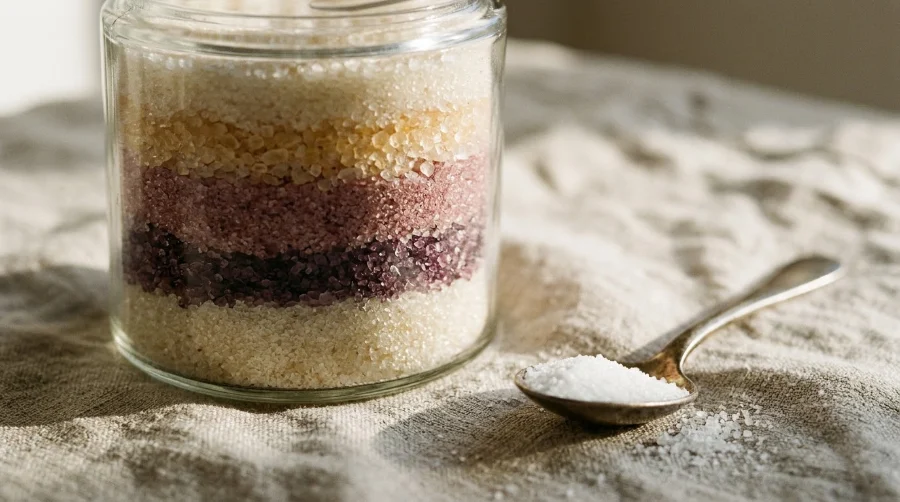
Layered bath salts in a clear jar are a gift that looks carefully made even when the process is straightforward. Bands of color stack inside the glass, the lid…
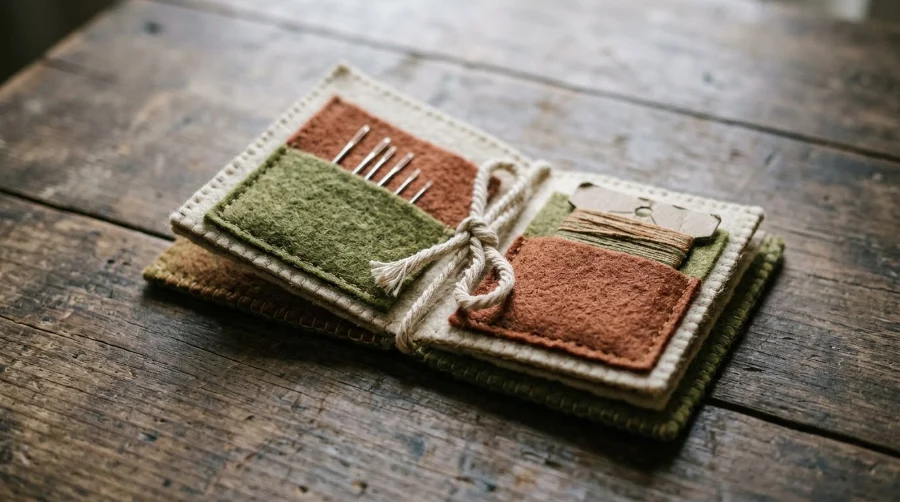
Before cutting anything, decide where each needle, pin, and length of thread will actually live. A needle book works because everything has a defined place: sewing…